
Launching ideas
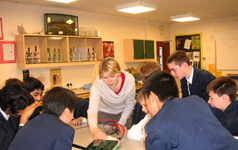
Isabel Plantier teaches biology and geology to 15-year-old students in Portugal. She has been teaching for 25 years and tells Sai Pathmanathan that time really does fly when you’re having fun.
Showing 10 results from a total of 242
Isabel Plantier teaches biology and geology to 15-year-old students in Portugal. She has been teaching for 25 years and tells Sai Pathmanathan that time really does fly when you’re having fun.
Naheed Alizadeh from Imperial College, London, UK, explains how and why the INSPIRE project is trying to make inspirational science lessons, clubs, and master classes regular features of the state school timetable in the UK.
The most exciting recent education event for me was Science on Stage, EIROforum’s international teaching festival. I enjoyed meeting many of the 500 teachers attending from 28 countries – listening to their suggestions, hearing about their experience and marvelling at their innovative teaching…
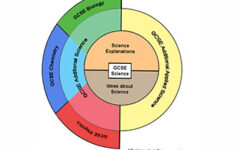
In September 2006, after a pilot phase, a new national curriculum for science was introduced for students aged 14-16 in England and Wales. Jenifer Burden explains how the new curriculum seeks to address both the scientific needs of all citizens, and the additional needs of future scientists.
Once again, we are happy to offer you a wide range of articles written by teachers, scientists and others from nine different countries.
John Watson, “the teacher who does handstands in class”, reminisces about what drew him to teach biology, shares memorable moments from his 38-year teaching career, and explains how scientists can help to inspire science teaching.
How much do Europeans really know about science and technology? What do they think about it? Do they even care? Russ Hodge from the European Molecular Biology Laboratory reports on one of the Eurobarometer surveys.
Feedback from our readers has continued to be very positive: you’ve told us that you like the variety of articles, the informative but readable style, and the unique combination of ideas drawn from teachers and scientists across Europe.
The challenge can be read in ‘The joy of discovery: a personal experience‘ The trail from which Comet West was discovered is indicated by an arrow Image courtesy of ESO
Svein Sjøberg and Camilla Schreiner from the University of Oslo, Norway, explain how they are investigating young people's attitudes towards science and technology.
Launching ideas
Inspirational lessons in the science class
Welcome to the fifth issue of Science in School
Twenty First Century Science: developing a new science curriculum
Welcome to the fourth issue of Science in School
Handstands and ties: a career in teaching
What Europeans really think (and know) about science and technology
Welcome to the third issue of Science in School
Answer to the challenge in The joy of discovery: a personal experience
How do students perceive science and technology?