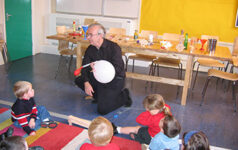
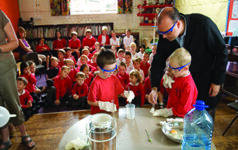
Catch them young! Alex Griffin, Tim Harrison and Dudley Shallcross from the University of Bristol, UK, show how important it is to interest young children in science – and how much fun it can be!
It can be difficult and time consuming to develop materials for really good science lessons. Many scientific research organisations, however, provide teaching resources, often designed together with teachers. Researchers provide scientific expertise and the teachers bring years of experience in the…
Why do some people find that their urine smells horribly after eating asparagus? Should green beans be cooked with the lid on or off? How hot are chilli peppers? What affects the colour and texture of cooked vegetables? These are a few of the questions that the Kitchen Chemistry book and CD-ROM aim…
Halina Stanley from the American School in Grenoble, France, reviews some of her favourite ‘ask a scientist’ websites in English and French. Thanks to the help of many readers throughout Europe, we can also draw your attention to sites in Croat, Danish, Finnish, Hungarian, Norwegian,…
The Science Magic books are part of a series of home-based practical science books that take as their unusual theme the use of items typically found in particular rooms of the house.
At Science on Stage 2, the European Science Teaching Awards 2007 were presented for the 12 best projects. Eleanor Hayes, editor of Science in School, describes how the jury made their difficult decisions
Science on Stage 2 took place during the first week of April and brought together some of the best science teachers in Europe. Montserrat Capellas describes some memorable moments.
Elisabeth Schepers from the Deutsches Museum in Munich, Germany, introduces a school programme linking climate change and the future of traffic technology.
Ages: <11, 11-14, 14-16, 16-19; Topics: Earth science, General science