Science in School is published by EIROforum, a collaboration between eight of Europe’s largest inter-governmental scientific research organisations. This article reviews some of the latest news from the EIROforum members (EIROs).
Ages: not applicable; Topics: News from the EIROs, Physics, Biology, Astronomy / space, Earth science, Engineering
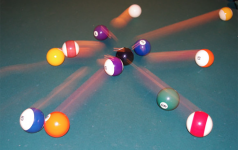
How do physicists study very small objects (like molecules, atoms, and subatomic particles) and very large objects (such as galaxies) that cannot be directly observed or measured?
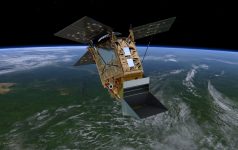
What can the colours on a satellite map actually tell us about the air we breathe?
Join us as we explore how the Copernicus Sentinel satellites detect gases such as nitrogen dioxide, and how chemistry helps us understand what’s happening in the atmosphere above us.
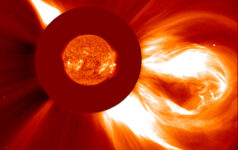
Ever wondered what the solar wind means to us on Earth or what happens when the surface of the Sun erupts sporadically? Lucie Green from University College London's Mullard Space Science Laboratory, UK, describes some of the recent research into the Sun’s atmosphere.
Science in School is published by EIROforum, a collaboration of research organisations. Eleanor Hayes, Editor-in-Chief of Science in School, reviews some of the latest news from the EIROforum members.
Ages: not applicable; Topics: News from the EIROs, Biology, Astronomy / space, Health
Science in School is published by EIROforum a collaboration between eight of Europe’s largest inter-governmental scientific research organisations (EIROs). This article reviews some of the latest news from EIROs.
Ages: not applicable; Topics: News from the EIROs, Physics, Biology, Chemistry
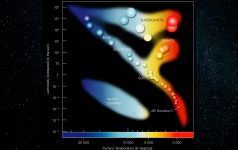
From notebook sketches to space-telescope data: explore how mapping starlight using the Herzsprung-Russell (H-R) diagram helps us trace the life stories of stars across the universe.