Why is science important? “It helps us find out what on Earth is going on.” “It can lay the groundwork for a great career.” “It is our best chance for tomorrow.” “It provides us with opportunities and choices.” These and more statements can be found on Alom Shaha’s webpage, Why is…
Earthquakes, global climate or the placement of wind farms – with the help of geographic information systems, these can all be investigated dynamically in the classroom. Joseph Kerski describes how.
The scope of Why the Lion Grew its Mane: A Miscellany of Recent Scientific Discoveries from Astronomy to Zoology, as stated by the author, is to offer a “fascinating collection of recent discoveries that overturn popular conceptions, enter realms that were previously the preserve of science…
Marine biologist Jean-Luc Solandt tells Karin Ranero Celius about his commitment to study and preserve one of the world’s biggest treasures: the ocean.
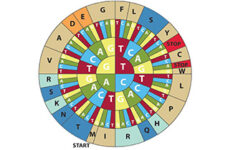
How does cancer develop, and how can geneticists tell that a cell is cancerous? This teaching activity developed by the Communication and Public Engagement team from the Wellcome Trust Sanger Institute, UK, answers these and other related questions.
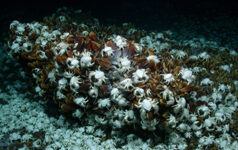
David Fischer takes us on a trip to the bottom of the sea to learn about cold seeps – their ecosystems, potential fuels, and possible involvement in global warming.
Chinese dragons that predict earthquakes? Waves of glowing jelly babies? Earthquake-proof spaghetti? Physics teachers Tobias Kirschbaum and Ulrich Janzen explain how they teach geophysics.