Issue 7
Submitted by sis on Wed, 2007-12-12 20:47.
Editorial
- Welcome to the seventh issue of Science in School
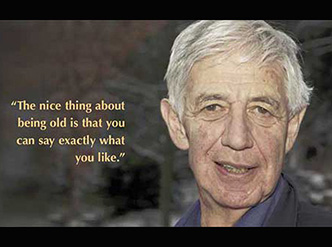
In our feature article, Vienna Leigh interviews Professor Lewis Wolpert, who leads a research group on the development of the embryo and is active in science communication. He shares with us his controversial ideas about belief, science education and much more. Whether you agree with him or not, why not leave your comments on our website? ...
Read (English, Spanish) | PDF [228 KB]
Events
- Forthcoming events
Read (frequently updated) | PDF [164 KB]
Feature article: Lewis Wolpert
- Interview with Lewis Wolpert
Professor Lewis Wolpert discusses his controversial ideas about belief, science education and much more with Vienna Leigh.
Read (English, Greek) | PDF [176 KB]
Cutting-edge science
- Mercury: a poisonous solution
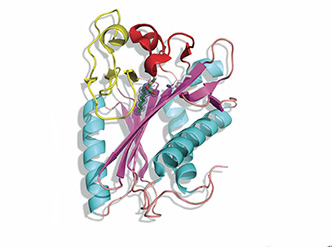
Sigrid Griet Eeckhout investigates what determines the toxicity of mercury compounds – and how X-ray light is helping to solve the mystery.
Read (English, Greek, Spanish) | PDF [252 KB]
- Fighting an old enemy: tuberculosis
Tuberculosis isn’t something Europeans normally worry about. But the disease is re-emerging and is resistant to many of our drugs. Claire Ainsworth describes how scientists are trying to hold the disease back.
Read (English, French, German, Greek, Macedonian, Portuguese) | PDF [276 KB]
- The great migration
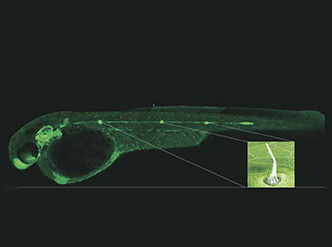
Why are cells like wildebeest? Laura Spinney investigates the migration of cells and the formation of organs, using the tiny and transparent zebrafish.
Read (English, French, German, Portuguese, Spanish) | PDF [356 KB]
Teaching activities
- What happens next? A teaching strategy to get students of all ages talking
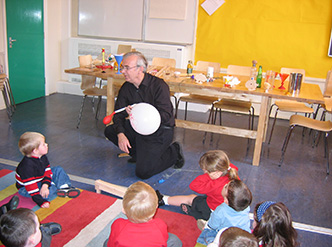
David Featonby presents some simple demonstrations to get your students thinking about scientific principles.
Read (English, Bulgarian, Greek, Polish) | PDF [244 KB]
- Primary circuses of experiments
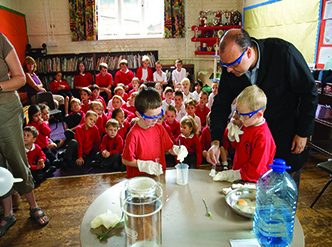
Alex Griffin, Tim Harrison and Dudley Shallcross show how important it is to interest young children in science – and how much fun it can be!
Read (English, Polish, Spanish) | PDF [268 KB]
Projects in science education
- Learning through research: a Serbian tradition
Srdjan Verbic tells the story of the Petnica Science Center, which brings enthusiastic students (and teachers) from across Europe to a village in Serbia, where together they discover the joy and fascination of science.
Read (English, Bulgarian) | PDF [340 KB]
- Students Catch a Star: researching and observing a solar eclipse
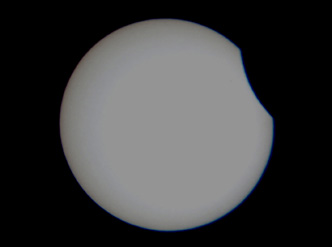
Students Jan Měšťan and Jan Kotek and teacher Marek Tyle from the Gymnázium Písek in the Czech Republic Students won the 2007 Catch a Star competition. Sai Pathmanathan describes their prize-winning project.
Read (English, Polish) | PDF [384 KB]
- Classroom@Sea: bringing real marine science into the classroom
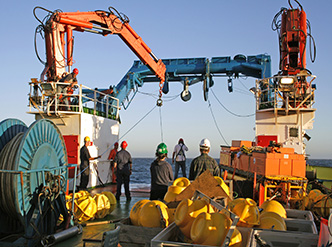
Bringing marine science into the classroom can be challenging work for teachers. So why not take the classroom – and the teachers – to sea? Vikki Gunn’s Classroom@Sea project does just that.
Read | PDF [308 KB]
Science topics
- What do we know about climate? The evidence for climate change
In the first of two articles, climate researcher Rasmus Benestad examines the evidence for climate change.
Read (English, French, German, Polish, Portuguese, Spanish) | PDF [240 KB]
- Fusion in the Universe: gamma-ray bursts
Henri Boffin follows the mystery of gamma-ray bursts from their first discovery to the most recent research on these dramatic astronomical explosions.
Read (English, Dutch, Hungarian, Italian, Polish) | PDF [340 KB]
Scientist profile
- Chemistry: a career catalyst
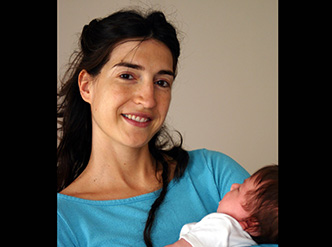
Gemma Guilera tells Montserrat Capellas about the joys of her rollercoaster approach to life. Fearlessly, she has started a new life more than once, making her home in very different European cities in the pursuit of a scientific career. Today, she faces a new challenge: motherhood.
Read | PDF [300 KB]
Teacher profile
- Teaching in the Ukraine: Halyna Yagenska
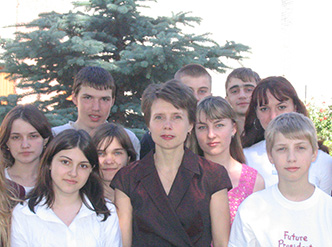
Halyna Yagenska is no ordinary woman. Devoted mother of two and a teacher for 18 years, she works hard to improve science teaching in her home country, was named Best Ukrainian Biology Teacher in 2004 and was awarded the title ‘Honour Teacher of Ukraine’ by the president of the Ukraine. She tells Sai Pathmanathan what she loves about teaching science, describes her efforts to link teachers with each other, and shares her hopes for science education in the Ukraine.
Read | PDF [240 KB]
Reviews
Resources on the web
- Free online teaching materials
It can be difficult and time consuming to develop materials for really good science lessons. Many scientific research organisations, however, provide teaching resources, often designed together with teachers. Researchers provide scientific expertise and the teachers bring years of experience in the classroom.
Sabrina Graß reviews some online materials to help you to enliven your lessons and excite students about science.
Read | PDF [296 KB]
|